Call Of Duty Movie Director Previously Called Playing Video Games ‘Weak’ And ‘Pathetic’
Apr. 27th, 2026 09:16 pm![[syndicated profile]](https://www.dreamwidth.org/img/silk/identity/feed.png) kotakuvip_feed
kotakuvip_feed
Peter Berg, who is directing the upcoming CoD movie, didn't seem like a fan of video games a decade ago
kotakuvip_feedkotakuvip_feed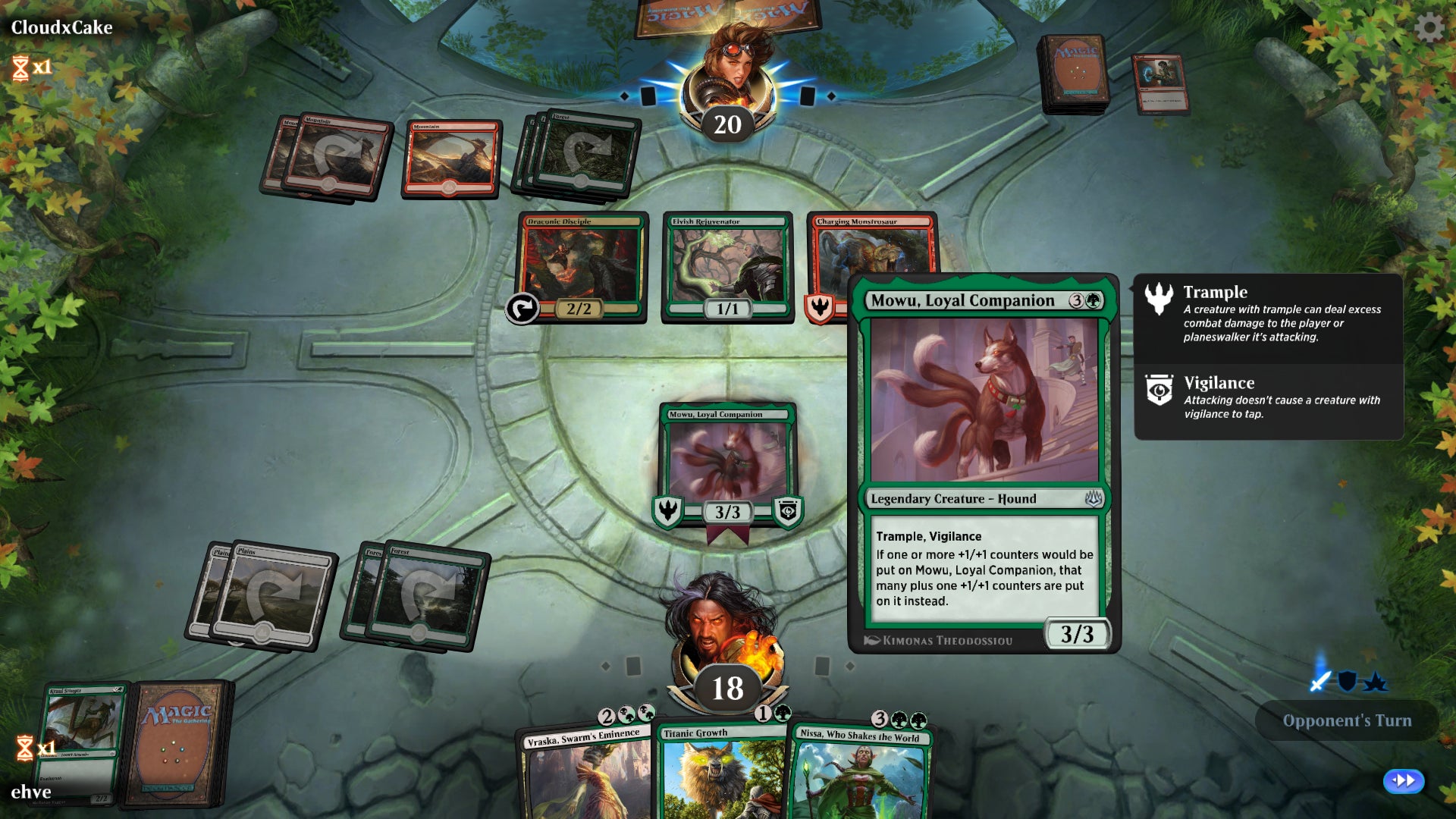 animenewsnetwork_feedhorrorlitreddit_feed
I started Brian Hodges the darker saints but I was having a hard time reading it due to the small print. I got the ebook version and I noticed the page count got reduced to 360 something from 390 something. I checked the first four chapters and they all started the same,so I'm curious, is there a difference between the two?
animenewsnetwork_feedkotakuvip_feed horrorlitreddit_feed
I made a post yesterday asking for your opinions on the book. I finished it this morning and just wanted to share my opinion. I went into this book not knowing anything of it aside from the excerpt it offers. I had no idea this book was popular at some point or overhyped the way others have mentioned. This was a blind read. There are spoilers below.
It was okay. I started out the book enjoying being in the mind of a very indifferent mc but towards the end where he’s having what I guess was a crisis (?), it dragged. It dragged hard. I found myself skipping over paragraphs because of how much I wanted to be done with it already. For it being first person and I’m assuming intentionally written in his indifferent tone, there was no fleshing around his thought process. His decision to sleep with the female. Keeping her, treating her like a pet. Him eating meat for the first time after his son’s death. Things like that I felt could’ve been idkkkkk elaborated on???? It kind of felt as if he was making decisions with no reasoning and just powering through the consequences that follow.
In regards to the horror aspect of it, it’s meh. I understand it being written in the pov of a man who’s just accepting this new world, but it could do with a little beefing around the edges. It was more gore than anything. Not necessarily scary but still horrifying in a cannibal kind of way.
As for the actual plot of the book. There is none. I think this book is very intentionally written to be a window into this man’s mind. Despite the fact that there was no inner turmoil regarding his decisions, the reader is very much just going through the motions alongside MC. There was also an undertone of “the government lied about the virus”. That could’ve been a very big thing to work into the plot, but it’s always just mentioned in the background
The ending, while I didn’t expect it, was okay. I grew accustomed to just accepting whatever decisions mc made for himself because he was so indifferent. I wanted to say the ending was great but it was lackluster. The wife’s reaction threw me for a bit of a loop, though.
Whatever theme this book was going for was completely lost on me. I have no idea why this book was written. I also will not be likely to pick it up again. It’d be interesting to compare the translations because reading the book was a bit off, but I’m not about to drop more money for this.
TLDR it’s a 2/5, not worth the money I paid for it
![[personal profile]](https://www.dreamwidth.org/img/silk/identity/user.png) rachelmanija
rachelmanija
 width="500">
 kotakuvip_feed
 animenewsnetwork_feedarstechnica_feed
China has blocked US tech giant Meta’s acquisition of the AI company Manus that was founded by Chinese tech entrepreneurs. That development indicates how difficult it has become for US and Chinese tech companies to strike and sustain such deals as government authorities on both sides take an increasingly hard line amid the deepening US-China AI rivalry.
The Chinese government formally asked Meta to unwind the acquisition on April 27 after deciding to ban foreign investment in Manus based on national security concerns. It had already spent months officially scrutinizing Meta’s $2 billion acquisition of Manus that took place in December 2025—Chinese regulators announced they were reviewing the deal in January 2026 and instructed the two Manus cofounders to not leave China while the investigation was ongoing, according to The Wall Street Journal.
Manus burst onto the scene in March 2025 with its “general AI agent,” designed to help users with tasks such as searching real estate sites for a new home or booking airline tickets and hotels for an international trip. The Manus AI agent is an “agentic wrapper” or “agentic harness” that enables an underlying AI model—in this case, Anthropic’s Claude 3.7 Sonnet—to take actions to carry out user requests. But Manus actually incorporates multiple AI agents to perform and verify tasks, including a planner agent that assigns tasks and an executor agent that can browse and interact with websites, create spreadsheets, use various software tools, and even code new applications.
arstechnica_feedThe next time you walk into a purportedly "haunted" house and sense a ghostly presence, consider that those feelings might be due to vibrating pipes, mechanical or climate control systems, rumbling from traffic, or wind turbines, rather than anything paranormal. That's the conclusion of a new paper published in the journal Frontiers in Behavioral Neuroscience. All of those are sources of infrasound.
Scientists have long sought to find logical explanations for alleged hauntings. In 2003, for instance, University of Hertfordshire psychologist Richard Wiseman conducted two studies that investigated the psychological mechanisms underlying supposed "ghostly" activity. Subjects walked around Hampton Court Palace in Surrey, England, and the South Bridge Vaults in Edinburgh, Scotland—both with reputations for manifesting unusual phenomena—and reported back on which places at those sites they sensed such phenomena. The subjects reported more odd experiences in places rumored to be haunted, regardless of whether the subjects were aware of those rumors or not.
Those areas did, however, feature variances in local magnetic fields, humidity, and lighting levels, suggesting that such sensations are simply people responding to normal environmental factors. Wiseman hypothesized that stronger magnetic fields may affect the brain, similar to how electrical stimulation of the angular gyrus can make one feel as if there is another person standing behind, mimicking one's movements.
arstechnica_feedSince time immemorial, serious PC gamers have proselytized about the superiority of mouse and keyboard control schemes over the more input-limited handheld controllers used by most console gamers (and others). In recent years, though, many PC gamers have started keeping a spare Xbox controller (or similar) nearby for the increasing number of PC games designed primarily or exclusively with thumbsticks and buttons in mind.
Valve's upcoming Steam Controller (not to be confused with the 2015 controller of the same name) is the Steam maker's effort to replace those controllers with something more explicitly designed for the PC, and for the upcoming Steam Machine. After spending a few weeks with the controller, though, we're not quite sure it sets itself apart from the competition enough to justify its high $99 asking price.


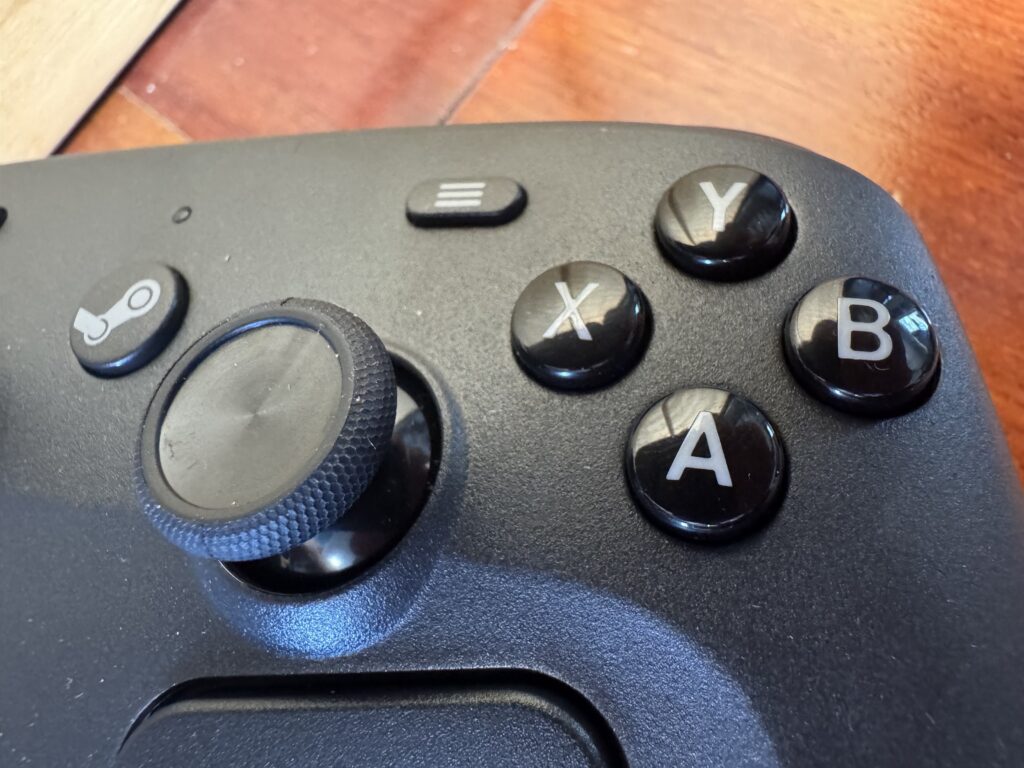
From the first time you hold a Steam Controller in your hands, it's clear that this is a well-made piece of hardware. There's a sturdy build quality to all the pieces that makes the controller feel solid in the hand, with just enough heft to feel substantial without being too heavy.
animenewsnetwork_feedseekingferretyourlibrariansoc_puppet's offer to make sheep icons for folks as part of ![[community profile]](https://www.dreamwidth.org/img/silk/identity/community.png) 3weeks4dreamwidth I now have one in my favorite colors! And I'm repurposing my old sheep icon for use at tv_talk, which, thanks to seleneheart, I got during a previous 3 Weeks event.
3weeks4dreamwidth I now have one in my favorite colors! And I'm repurposing my old sheep icon for use at tv_talk, which, thanks to seleneheart, I got during a previous 3 Weeks event. Want to leave a Kudos?
horrorlitreddit_feedI’ve been listening to a lot of Appalachian stories recently and would love some good books on the matter
kotakuvip_feed - Call Of Duty Movie Director Previously Called Playing Video Games ‘Weak’ And ‘Pathetic’kotakuvip_feed - Magic: The Gathering Arena Developers Unionize For Better Layoff, Remote Work, and GenAI Protectionsanimenewsnetwork_feed - Sakuna: Of Rice and Ruin Smartphone Game Ends Service, Shelves PC Releasehorrorlitreddit_feed - Dell abyss Brian hodge the darker saints ebook vs paperba to kanimenewsnetwork_feed - Gido Amagakure's Yurayura Q Manga Endsj_crew_guy - Slow news day?kotakuvip_feed - The Week In Games: Peak Diablo 4 And The Return Of Heroes Of Might And Magickotakuvip_feed - Nintendo’s Cinematic Universe Could Be Another ‘Everyone Is Here’ Moment With Kirby, Star Fox, Luigihorrorlitreddit_feed - I’ve finished Tender is the Fleshrachelmanija - A Wizard of Earthsea graphic novel, by Ursula Le Guin, adapted & illustrated by Fred Fordhamtwistedchick - (no subject)kotakuvip_feed - Valve’s New Steam Controller: The Kotaku Reviewanimenewsnetwork_feed - '8th Loop for the Win!' Manga Artist Riku Natsume Launches New Seriesarstechnica_feed - China kills Meta’s acquisition of Manus as US-China AI rivalry deepensarstechnica_feed - Study: Infrasound likely a key factor in alleged hauntingsarstechnica_feed - Steam Controller: The Ars Technica reviewanimenewsnetwork_feed - Koji Yamamura's 'Haru no Umi,' More Japanese Short Films Compete at 2026 Annecyseekingferret - (no subject)yourlibrarian - Get Icons!horrorlitreddit_feed - Appalachian horrortimeasmymeasure